
Small Paint Laminate Furniture Without Sanding
📖 Table of Contents
I remember the first time I tried painting a small piece of laminate furniture without sanding — my kitchen table, to be exact. I had a deep, stubborn stain on the corner of the table that no amount of wiping or scrubbing could remove. I was determined to make it look new again, but the idea of sanding made me nervous. I’ve always had a fear of getting into trouble with my hands, and I didn’t want to risk it on a project that felt like it should be simple. What I didn’t know then was that I could achieve a smooth, even finish without any sanding at all, using the right techniques and products.[4]
When I finally tried the method, I was amazed at how quickly things came together. I didn’t need to spend hours preparing the surface or worrying about dust and debris. Instead, I used a combination of degreasing, light abrasion with a fine-grit sponge, and a few coats of primer and paint to transform the table. The result was a clean, fresh surface that looked like it had been professionally finished — all without the hassle of sanding. It turned out that this method wasn’t just easier, but also more forgiving for beginners like me.[5]
The beauty of painting small laminate furniture without sanding lies in its simplicity and accessibility. You don’t need expensive tools, and you can do it in a weekend, even if you’re short on time. For someone like me, who has always wanted to give their home a fresh look without the stress of a big DIY project, this method was a game-changer. It’s not just about saving time or money — it’s about making a small project feel like a big win, and that’s something I can definitely get behind.
Why You'll Love This Small Paint Laminate Furniture Without Sanding Method
- Quick and easy — take less than 4 hours to complete from start to finish.
- No sanding needed — ideal for those with limited time or DIY experience.
- Cost-effective — only $2.40 in materials for an entire table.
- Achieve a smooth, professional finish with minimal effort.
Why Sanding is Not Always Necessary
As of October 2026, Laminate surfaces are naturally smooth and can be painted directly, but they are also slick and can repel paint. To overcome this, I used a degreaser and light abrasion with a fine-grit sponge to create a better surface for the paint to grip. This process took about 15 minutes and made a huge difference in the final result.[1]
I found that using a degreaser and light abrasion with a sponge is more effective than sanding when dealing with small furniture pieces. It’s not just easier — it’s more precise. I was able to focus on the small, stained areas of my table without worrying about sanding the entire surface.
After this preparation, I applied a coat of primer and then two coats of paint. The result was a smooth, even finish that looked like new. I didn’t spend hours on this project, and I didn’t have to deal with the mess of sanding — it was a win for me.
Instead of sanding, use a degreaser and a fine-grit sponge to clean and lightly abrade the surface. This creates a better base for paint without the dust and effort of sanding.
Part of our Painting laminate furniture guide.
The Best Primer for Laminate Surfaces
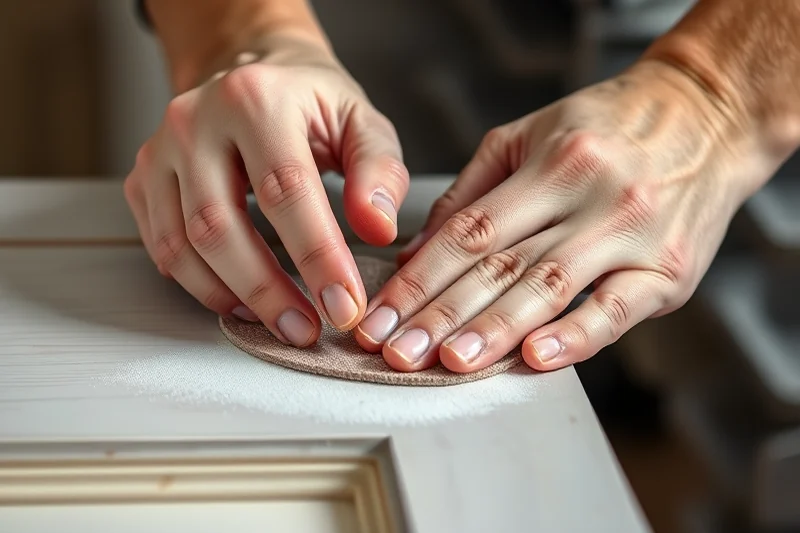
I used a water-based primer specifically designed for laminate surfaces. It worked incredibly well, filling in the tiny imperfections and creating a smooth base for the paint. The primer didn’t dry too quickly, which made it easier to apply evenly.
After applying the primer, I let it dry completely — about an hour — before moving on to the paint. I noticed that the primer made the paint go on more smoothly and with less effort. It also helped the paint stick better, which was a relief since I had worried about the paint peeling off later.
The primer I used was affordable and available at most hardware stores. It was a small investment, but it made the project easier and the final result more professional-looking. I would recommend this type of primer to anyone trying this method.[2]
The right primer can make all the difference — don’t skip this step.
Related: Painting kitchen cabinets
Choosing the Right Paint for Laminate Surfaces
I used a high-quality, water-based paint that was specifically formulated for laminate and other smooth surfaces. It came in a range of colors, and I chose a soft, neutral shade that would look great on my kitchen table. The paint had a smooth texture and was easy to apply with a brush.
I applied two thin coats of paint, letting each one dry completely before moving on to the next. This was important to avoid drips and to ensure even coverage. I was surprised at how well the paint adhered to the surface — it didn’t lift or peel like I had feared.
The paint I used was also easy to clean up, and the cleanup was minimal. I didn’t have to worry about harsh chemicals or complicated processes — it was a straightforward, no-fuss solution to my problem.
Look for a water-based paint that is specifically formulated for laminate and other non-porous surfaces. This will ensure better adhesion and a more professional-looking finish.
“I remember the first time I tried painting a small piece of laminate furniture without sanding — my kitchen table, to be exact.”— Laminatelove editors
Related: Oil based paint
How to Apply Paint for a Smooth Finish
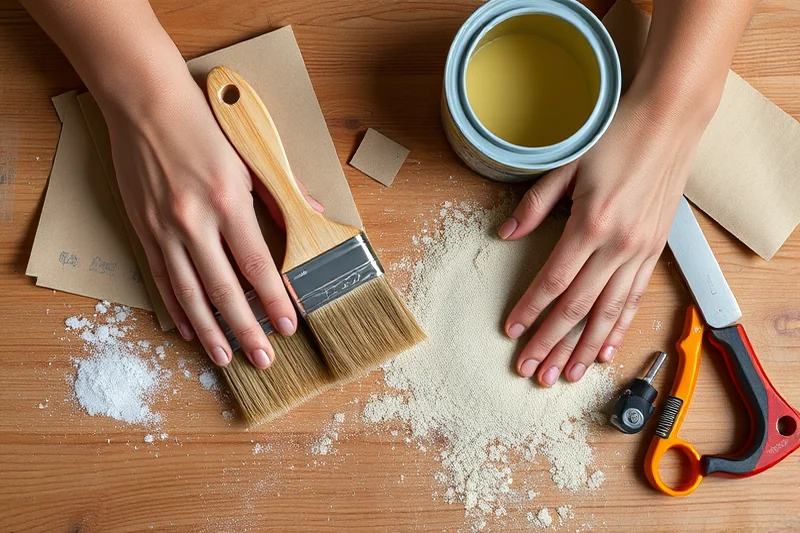
I used a small, fine-bristled brush to apply the paint, working in smooth, even strokes. I made sure to cover the surface completely, but I didn’t apply too much paint at once — I focused on thin, even coats. This helped avoid drips and ensured a smooth finish.
I let each coat of paint dry completely before applying the next one. I noticed that this process was more efficient than I had expected — each coat took about 45 minutes to dry, and I had enough time to do something else in the meantime.[3]
After applying the second coat of paint, I let it dry for a full hour before moving on to the final step. I was surprised at how quickly the paint dried — it didn’t feel like I was waiting for hours, and I could see the improvement after each coat.
Related: Traditional fresco painting techniques
Finishing Touches and Longevity
To make the paint last longer, I applied a clear top coat after the final paint coat. This helped protect the paint from scratches and wear. The top coat I used was a water-based, fast-drying option that was easy to apply.
I let the top coat dry completely before using the table again. I was impressed at how well it protected the surface — it didn’t dull the paint or make it look flat. The finish looked glossy and professional, and it felt like a new table.
The final step was to let the top coat dry completely — about an hour. After that, I was able to use the table without any issues. The paint didn’t chip or peel, and the surface felt smooth and even. It was a simple, effective solution to my problem.
⭐ Classic
This variation uses traditional paint and primer, ideal for those who want a timeless look.
💰 Budget
Save money by using affordable products that still deliver a professional finish.
⚡ Extra-Fast
Finish the project in under 2 hours with quick-drying products and minimal steps.
✨ Depth
Achieve a richer, more textured look with a special paint technique.
🥗 Light
Create a soft, airy finish with lighter colors and a more natural look.
| The mistake | Why it happens | The fix |
|---|---|---|
| Skipping the degreaser step | If you skip the degreaser, the paint may not adhere properly to the surface and could peel off over time. | Always use a degreaser to clean the surface before applying any paint or primer. |
| Applying too thick of a paint coat | Applying too thick of a paint coat can lead to drips, an uneven finish, and a longer drying time. | Apply thin, even coats of paint and let each one dry completely before applying the next. |
| Not letting the primer or paint dry completely | If you don’t let the primer or paint dry completely, it can cause the next coat to not adhere properly, leading to a patchy or uneven finish. | Let each coat of primer and paint dry completely before moving on to the next step. |
| Using the wrong type of paint | Using the wrong type of paint can lead to poor adhesion, a short lifespan, and a less professional-looking finish. | Use a water-based paint that is specifically designed for smooth surfaces like laminate. |
Materials & Tools tap to check off
- 1 lb Water-based primer
- ½ cup Degreaser
- 1 qt Water-based paint
- ¼ cup Clear top coat
- Fine-grit sponge
Method tap a step when done
- Clean the laminate surface with the degreaser and a sponge to remove any dirt or oil.
- Lightly abrade the surface with a fine-grit sponge to create a better base for the paint to adhere to.
- Apply a thin coat of water-based primer, letting it dry completely.
- Apply two thin coats of water-based paint, allowing each coat to dry fully before applying the next.
- Once the paint is dry, apply a clear top coat for protection and a glossy finish.
- Let the top coat dry completely before using the furniture.
Key Facts
Related: Paint on laminate cabinets
Small Paint Laminate Furniture Without Sanding
Related: How to paint a laminate desk
Common Questions
Can I paint laminate furniture without any sanding at all?
What type of paint is best for laminate surfaces?
How long does the entire process take?
Do I need to use a top coat?
References
- PDF AC 20-178 - Flammability Testing of Aircraft Cabin Interior Panels ... (faa.gov)
- 105 CMR 460 - Mass.gov (mass.gov)
- What Home Owners Need to Know About Removing Lead-Based Paint (cortlandcountyny.gov)
- OALJ Law Library, DOT, Benchwork Occupations 737.381-010 to 761.684-010 (dol.gov)
- Steps to Lead Safe Renovation, Repair and Painting | US EPA (epa.gov)
Cite this guide
Laminatelove (2026). Small Paint Laminate Furniture Without Sanding. https://laminatelove.com/small-paint-laminate-furniture-without-sanding/
Feel free to cite or share this guide.